
Technology
The Cobodoc™ robotic assistance platform
A modular, clinician-supervised platform combining robotics, software and surgical-instrument know-how to support complex minimally invasive workflows.
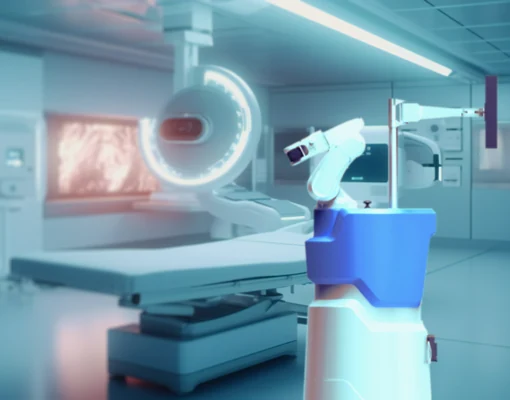
Platform concept
Collaborative assistance, designed around the surgeon
Cobodoc is being developed as a modular robotic assistance platform for future clinician-supervised minimally invasive procedures. It is designed around clinician supervision, procedural consistency, ergonomic interaction and compatibility with surgical instruments and clinical workflow requirements.
Our development strategy brings together robotics, software, surgical-device engineering and workflow-support tools, with physician judgment and control preserved at every step.
The clinical challenge
Reaching small, moving targets with precision
Imaging now detects tumors earlier and smaller – often under one centimetre. But treating them precisely remains difficult.
Targets move
Organs shift with breathing and patient position. A target located on a pre-operative image may not be exactly where the instrument arrives.
Systems multiply
Imaging, navigation and treatment probes are often separate systems. Each hand-off between them can add spatial error.
Imaging is costly
Image-guided positioning in environments such as MRI can be more precise, but also more constrained, costly and less accessible.
Cobodoc was born from the idea of a smart collaborative robotic assistant able to support accurate positioning of treatment tools on moving organic targets, with less dependence on heavy intra-operative imaging.
Proof of concept
Validated concept, continued development
In Lyon, France, a team of engineers and software developers worked with private and medical partners, including surgeons from a leading Lyon hospital. Preclinical in-vivo experiments supported the concept of collaborative, intelligent robotic positioning on a moving target applied to the focal treatment of solid tumors.
These results have supported continued platform development. Future performance characteristics remain subject to additional validation and regulatory review.
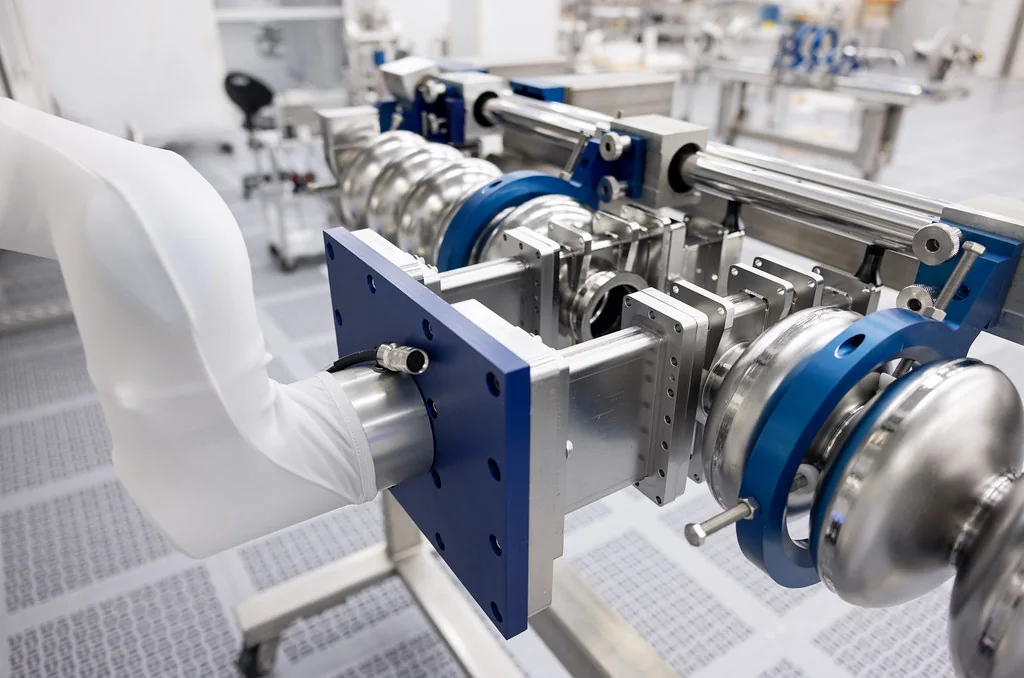
Architecture
Four building blocks
Robotic assistance
A collaborative arm designed to support clinician-supervised instrument holding, alignment and stabilisation, with ergonomic interaction and mobility in the operating room.
Software & workflow intelligence
Software to organise system configuration, user interaction, procedural planning and clinician-supervised workflow steps, compatible with image-guided environments.
Instrument interface
An interface designed for compatibility with surgical instruments – starting with Cobodoc’s own cranial instruments – subject to validation.
Safety-oriented design
Clinician oversight, risk analysis, traceability and usability engineering built into the development process from the start.
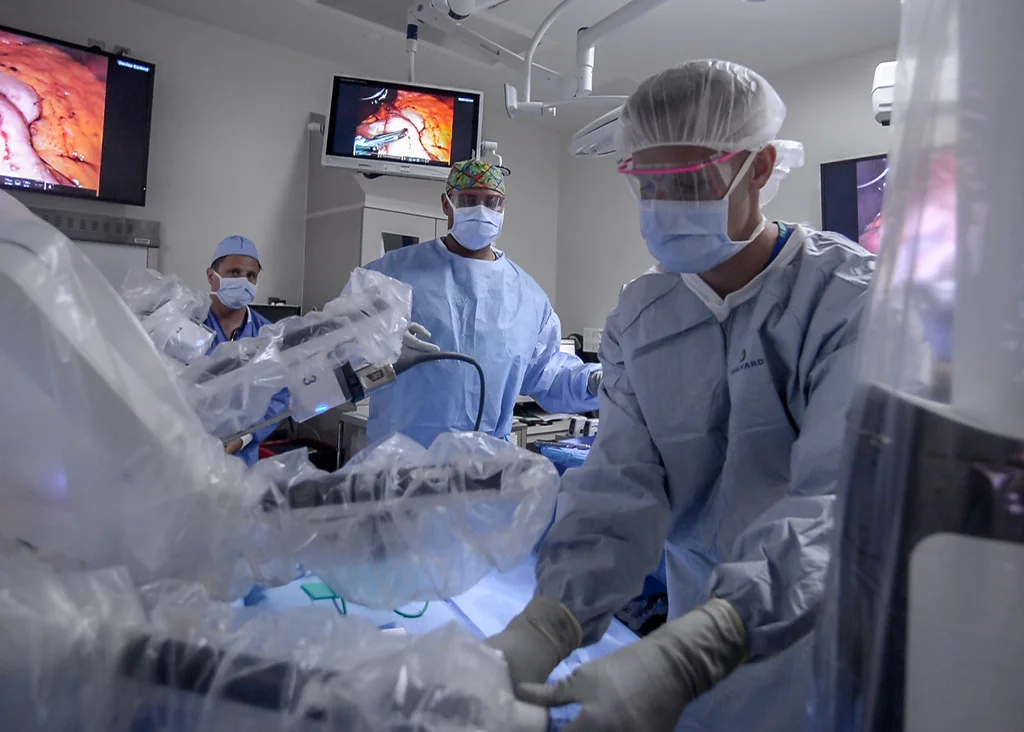
Development principles
Responsible by design
- Clinician oversight – the system assists; the surgeon keeps judgment and control.
- Workflow compatibility – designed to fit image-guided clinical environments.
- Modularity – adaptable to different procedures and compatible technologies.
- Ergonomics – designed with mobility and the operating-room footprint in mind.
- Privacy – any future use of procedural data handled under applicable privacy, ethical and regulatory rules.
Detailed technical materials under NDA
System architecture, development roadmap and confidential materials are available to qualified investors, accelerators, strategic partners and funding organizations.
Regulatory notice. Cobodoc’s robotic assistance platform is under development and is not commercially available. Future clinical use, indications, performance characteristics and benefits remain subject to development, validation, clinical evaluation and regulatory clearance.